
Flooring Advice 11 - Replacing Damaged Boards or Tiles in an Orangery
Replacing damaged boards or tiles in an orangery is an important maintenance task that protects both the visual elegance and structural performance of this distinctive glazed living space, particularly in homes across Knutsford, Cheshire and Manchester where seasonal temperature changes and frequent daily use can place additional stress on flooring materials. Orangeries are designed to combine substantial brickwork with expansive glazing and lantern roofs, creating bright, thermally efficient extensions that often serve as dining rooms, family spaces, or open-plan kitchen areas, and as a result, their floors experience consistent foot traffic alongside natural expansion and contraction caused by sunlight exposure.
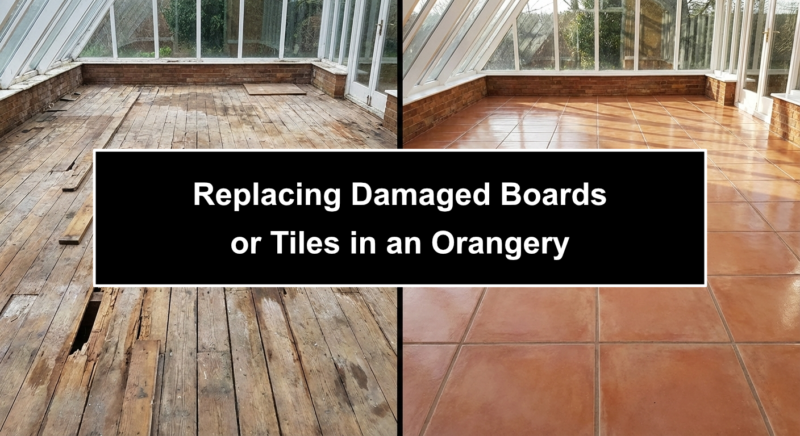
At Sunlight Windows & Conservatories, based at Fryers Garden Centre in Knutsford and proudly supporting homeowners throughout Cheshire and Manchester, we understand that flooring within an orangery must perform to particularly high standards due to increased light exposure, stable but fluctuating internal temperatures, and the expectation of a cohesive transition between the extension and the main property. While our core expertise lies in designing and installing premium orangeries and conservatories, we frequently advise clients on maintaining internal finishes to ensure their investment continues to look and perform at its best. Replacing isolated damaged boards or tiles is often a practical and cost-effective solution that preserves the integrity of the overall installation while maintaining the polished, high-end appearance that an orangery demands.
View this! View one of our bespoke Conservatory extensions
Restore both the durability and seamless appearance
Cracked porcelain tiles, chipped ceramic finishes, lifting luxury vinyl, swollen laminate boards, or scratched engineered timber can quickly detract from the refined appearance that defines an orangery interior, while also posing safety risks and increasing the likelihood of moisture penetration into the subfloor. Addressing damage promptly prevents minor defects from escalating into larger issues such as adhesive failure, subfloor deterioration, or widespread movement across adjacent boards or tiles. With a careful, methodical approach that identifies the flooring system, protects surrounding finishes, and ensures precise reinstallation, homeowners can restore both the durability and seamless appearance of their orangery flooring without resorting to a full replacement.
Identifying The Type And Extent Of Damage
Before beginning any repair work, it is essential to determine both the cause and scope of the damage to ensure that isolated replacement is appropriate and that no underlying structural issues remain unresolved. Hairline cracks in tiles may indicate impact damage from dropped objects, while hollow sounds beneath tiled areas can suggest adhesive breakdown or minor subfloor movement. Swelling or lifting in laminate boards often points to moisture exposure, potentially caused by spills, condensation, or compromised damp-proof membranes. Scratches, splits, or separation in engineered wood flooring may result from heavy furniture movement, inadequate expansion gaps, or thermal fluctuation within the glazed space. A thorough inspection of adjacent boards or tiles ensures the problem is localised and not symptomatic of a broader installation concern. Understanding whether the original floor was installed using click-lock systems, tongue-and-groove joints, or adhesive fixing methods is crucial in planning a safe and effective repair that preserves the surrounding area.
Replacing Damaged Tiles In An Orangery
Tile replacement within an orangery requires particular care to maintain alignment and preserve the clean, symmetrical aesthetic often associated with these bright extensions.
• Carefully remove grout surrounding the damaged tile using a grout saw or precision rotary tool to prevent cracking adjacent tiles.
• Break the damaged tile into smaller sections with controlled force, avoiding excessive pressure on neighbouring surfaces.
• Remove all existing adhesive and debris to create a smooth, level base for the new tile.
• Apply fresh adhesive evenly and position the replacement tile accurately, maintaining consistent spacing and alignment.
• Regrout once the adhesive has fully cured, ensuring the grout colour and finish match the surrounding installation.
When carried out carefully, tile replacement restores both structural stability and visual continuity, maintaining the refined finish expected in an orangery environment.
Replacing Laminate, Vinyl, Or Engineered Boards
Board-based flooring systems, commonly chosen in orangeries for their warmth and visual cohesion with adjoining rooms, require a slightly different approach depending on the locking or fixing mechanism used during installation.
• Identify whether boards can be disengaged from the nearest wall to access the damaged section without cutting.
• If removal from the perimeter is impractical, carefully cut out the affected board using precision tools to avoid disturbing surrounding planks.
• Prepare the replacement board by trimming locking edges where necessary to enable insertion.
• Apply an appropriate adhesive if required to secure the board firmly in place.
• Maintain correct expansion gaps around the perimeter to accommodate natural movement caused by temperature variation.
Ensuring precise alignment, secure joints, and uninterrupted expansion allowances is particularly important in an orangery, where sunlight exposure can cause subtle but ongoing material movement.
Addressing Environmental Factors Within An Orangery
Simply replacing a damaged board or tile without resolving contributing factors may lead to recurring problems. Orangeries benefit from improved thermal performance compared to traditional conservatories, yet they still experience elevated light levels and occasional temperature fluctuation. Confirming that subfloors are level, damp-proof membranes remain intact, and insulation is performing effectively is essential before installing replacement materials. In cases where damage is linked to moisture ingress or inadequate expansion allowance, these issues should be corrected at the time of repair. Where strong sunlight contributes to fading or expansion, selecting higher-grade, UV-resistant materials for replacement may enhance long-term durability. Addressing environmental considerations ensures that the repair not only restores appearance but also strengthens the overall resilience of the flooring system.
Maintaining A Seamless Finish
Achieving a professional and discreet repair depends largely on accurate material matching and careful installation technique. Retaining spare tiles or boards from the original orangery installation significantly simplifies colour, texture, and batch matching. If original materials are unavailable, sourcing compatible alternatives may require consultation with the original supplier or manufacturer to minimise tonal variation. In some cases, slight shade differences can be blended by repositioning surrounding boards or refreshing grout lines across a wider area for uniformity. Careful attention to joint spacing, surface level, and alignment ensures that the repaired section integrates seamlessly with the existing floor, preserving both the structural integrity and the elegant aesthetic of the orangery.
View this! Flooring Advice 01 - Best Flooring Options for Orangeries
Professional Advice From Sunlight Windows & Conservatories
Sunlight Windows & Conservatories, located at Fryers Garden Centre in Knutsford and serving homeowners across Cheshire and Manchester, recognise that maintaining high-quality flooring is essential to preserving the comfort, safety, and long-term value of any orangery. While we specialise in designing and constructing bespoke glazed extensions, we also provide practical guidance to help clients protect their interiors and extend the life of their investment. Replacing damaged boards or tiles promptly and professionally ensures that minor issues do not develop into structural concerns or detract from the refined atmosphere that defines an orangery. With thorough assessment, careful workmanship, and consideration of environmental performance, homeowners can restore their flooring confidently, maintaining both visual harmony and structural reliability for many years to come.
Disclaimer: Sunlight holds no responsibility for any work that you or anyone else carries out based upon the information contained within these help pages (i.e. prices and information contained may change at any time) - we are simply offering various suggestions to help ease your pain and lower your stress levels. For peace of mind, we always recommend using insured and trained personnel to carry out any work, to obtain an up-to-date quotation from at least three suppliers and to get as much information as possible from the company whom you choose to conduct business with.
Call in the Professionals!
01565 650 195
Why attempt to take on complicated work yourself? It could end up costing you more. Instead, make contact with our pro-maintenance team for a consultation to discuss your needs today. Understandably, for the work to be cost-effective, you must live within a 20 mile radius of Knutsford.
Visit our showroom:
Sunlight Windows & Conservatories
Fryers Garden Centre
Manchester Road
Knutsford
Cheshire
WA16 0SX
Leave a reply