
Flooring Advice 04 - Replacing Damaged Boards or Tiles
Replacing damaged boards or tiles is an essential maintenance task that preserves both the structural integrity and visual appeal of flooring in homes across Knutsford, Cheshire and Manchester, particularly in high-traffic areas or glazed spaces such as conservatories and orangeries where temperature fluctuations and daily use can accelerate wear. Damaged flooring, whether cracked porcelain tiles, chipped ceramic surfaces, swollen laminate boards, or scratched engineered timber, not only detracts from the appearance of a room but can also create safety hazards, moisture ingress points, and long-term structural concerns if left unaddressed.
At Sunlight Windows & Conservatories, based at Fryers Garden Centre in Knutsford and regularly assisting homeowners throughout Cheshire and Manchester, we understand that flooring plays a vital role in the overall performance and presentation of living spaces, particularly in extensions where light, temperature variation, and foot traffic can place additional demands on materials. While our expertise lies in the design and installation of premium glazed structures, we frequently advise clients on maintaining and repairing flooring to ensure their spaces remain safe, comfortable, and visually cohesive. Replacing individual boards or tiles is often a practical and cost-effective solution that extends the life of the entire floor while maintaining a professional finish.
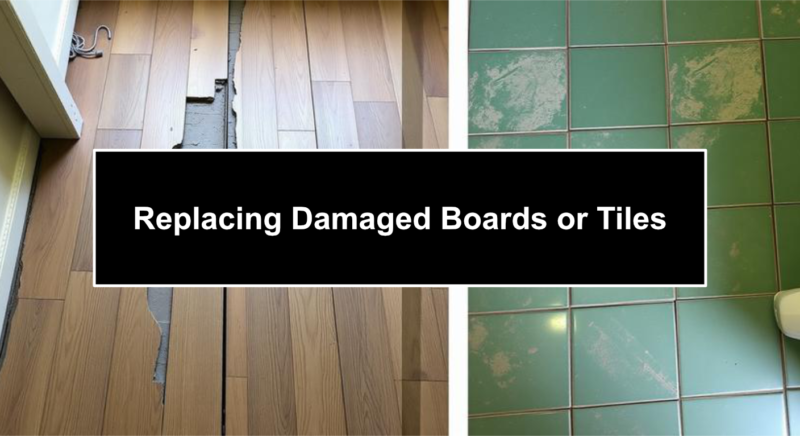
Prompt replacement prevents minor issues from developing into larger, more costly problems, such as subfloor damage or widespread lifting of adjacent materials. Successfully replacing damaged sections requires careful identification of the flooring type, precise removal techniques that avoid disturbing surrounding areas, and correct reinstallation methods to ensure a seamless and durable finish. By approaching the process methodically and using appropriate tools and materials, homeowners can restore the appearance and functionality of their flooring without the need for a complete replacement.
View this! View one of our bespoke Conservatory extensions
Identifying The Type And Extent Of Damage
Before undertaking any repair, it is important to assess the nature and cause of the damage to determine whether isolated replacement is appropriate or whether underlying structural issues must first be addressed. Surface cracks in tiles may result from impact damage, while hollow sounds beneath tiles can indicate adhesive failure. Swollen laminate boards often point to moisture exposure, and scratches or splits in engineered wood may be caused by heavy furniture movement or temperature fluctuations. Carefully inspecting adjacent boards or tiles ensures the problem is limited to a specific area and not indicative of subfloor instability or persistent damp. Identifying the original installation method, such as click-lock systems for laminate or adhesive-fixed porcelain tiles, is also essential in planning a safe and effective replacement process.
Replacing Damaged Tiles
Replacing a cracked or damaged tile requires precision to avoid disturbing surrounding tiles and grout lines, particularly where finishes are designed to appear seamless.
• Carefully remove grout around the damaged tile using a grout saw or rotary tool to prevent cracking adjacent tiles.
• Break the damaged tile into manageable pieces using controlled force, avoiding impact on neighbouring surfaces.
• Remove old adhesive thoroughly to create a clean, level base for the replacement tile.
• Apply fresh adhesive evenly and position the new tile with accurate alignment to surrounding surfaces.
• Regrout once adhesive has cured, ensuring consistent joint spacing and colour match.
When executed carefully, tile replacement restores structural strength and aesthetic consistency without requiring removal of the entire floor area.
Replacing Laminate Or Engineered Boards
Timber-based flooring systems often require a different approach, particularly where boards are connected through click-fit mechanisms or tongue-and-groove joints.
• Determine whether boards can be disengaged from the nearest wall to access the damaged section without cutting.
• If removal from the edge is impractical, carefully cut out the damaged board using precision tools.
• Prepare the replacement board by trimming locking mechanisms where necessary to allow insertion.
• Apply suitable adhesive where required to secure the new board firmly in place.
• Ensure expansion gaps remain intact to accommodate natural movement.
Attention to alignment, joint integrity, and expansion allowances ensures the repair blends seamlessly with the existing floor and maintains long-term stability.
Addressing Underlying Causes
Simply replacing damaged flooring without resolving the root cause can lead to repeated problems. Moisture ingress, insufficient expansion gaps, subfloor movement, or inadequate insulation may contribute to recurring damage. Ensuring that damp-proof membranes are intact, subfloors are level, and environmental conditions are stable is essential before installing replacement materials. In glazed spaces exposed to significant sunlight, UV-related fading or expansion should be considered, and higher-grade materials may be advisable for future durability. Addressing these factors at the time of repair protects the investment in flooring and prevents ongoing deterioration.
Maintaining A Seamless Finish
Achieving a professional result requires careful matching of replacement materials with the original installation. Retaining spare tiles or boards from the initial project greatly simplifies colour and batch matching. If original materials are unavailable, sourcing compatible alternatives may require consulting the original supplier or manufacturer. Minor differences in shade can sometimes be minimised by repositioning surrounding boards or regrouting larger sections to blend finishes evenly. Taking time to achieve consistent alignment, joint spacing, and surface level ensures the repair is visually discreet and structurally reliable.
View this! Flooring Advice 05 - Underlay and Insulation Requirements
Professional Advice From Sunlight Windows & Conservatories
Sunlight Windows & Conservatories, located at Fryers Garden Centre in Knutsford and proudly serving homeowners across Cheshire and Manchester, understand that maintaining high-quality flooring is essential to preserving the comfort and value of any living space. While we specialise in the design and construction of premium conservatories and orangeries, we regularly advise clients on practical maintenance solutions that extend the life of their interiors. Replacing damaged boards or tiles promptly and correctly ensures that minor issues do not compromise structural integrity or visual appeal. With careful assessment, precise workmanship, and attention to environmental conditions, homeowners can restore their flooring effectively, maintaining both safety and aesthetic harmony within their home for years to come.
Disclaimer: Sunlight holds no responsibility for any work that you or anyone else carries out based upon the information contained within these help pages (i.e. prices and information contained may change at any time) - we are simply offering various suggestions to help ease your pain and lower your stress levels. For peace of mind, we always recommend using insured and trained personnel to carry out any work, to obtain an up-to-date quotation from at least three suppliers and to get as much information as possible from the company whom you choose to conduct business with.
Call in the Professionals!
01565 650 195
Why attempt to take on complicated work yourself? It could end up costing you more. Instead, make contact with our pro-maintenance team for a consultation to discuss your needs today. Understandably, for the work to be cost-effective, you must live within a 20 mile radius of Knutsford.
Visit our showroom:
Sunlight Windows & Conservatories
Fryers Garden Centre
Manchester Road
Knutsford
Cheshire
WA16 0SX
Leave a reply